

Deloitte warns NZ firms to redesign work for AI era
Mon, 11th May 2026
Deloitte has published its 2026 Tech Trends report for New Zealand, identifying five technology trends reshaping how organisations operate.
The findings focus on AI, robotics, infrastructure, security and the structure of technology teams. Deloitte argues these shifts are colliding with local pressures such as an ageing workforce, labour shortages, limited capital and growing cyber risk.
New Zealand businesses are reaching a point where technology investment is expected to deliver clearer returns, the report says. Organisations making progress are redesigning work rather than layering new systems onto existing processes.
Matt Dalton, Partner at Deloitte New Zealand, framed the issue as economic as much as technical. "In this context, our Tech Trends 2026 report is less a catalogue of emerging technologies than a warning: the era of AI experimentation is over. Advantage now comes from redesigning how work is done, digitally and physically, at scale," he said.
Workforce shift
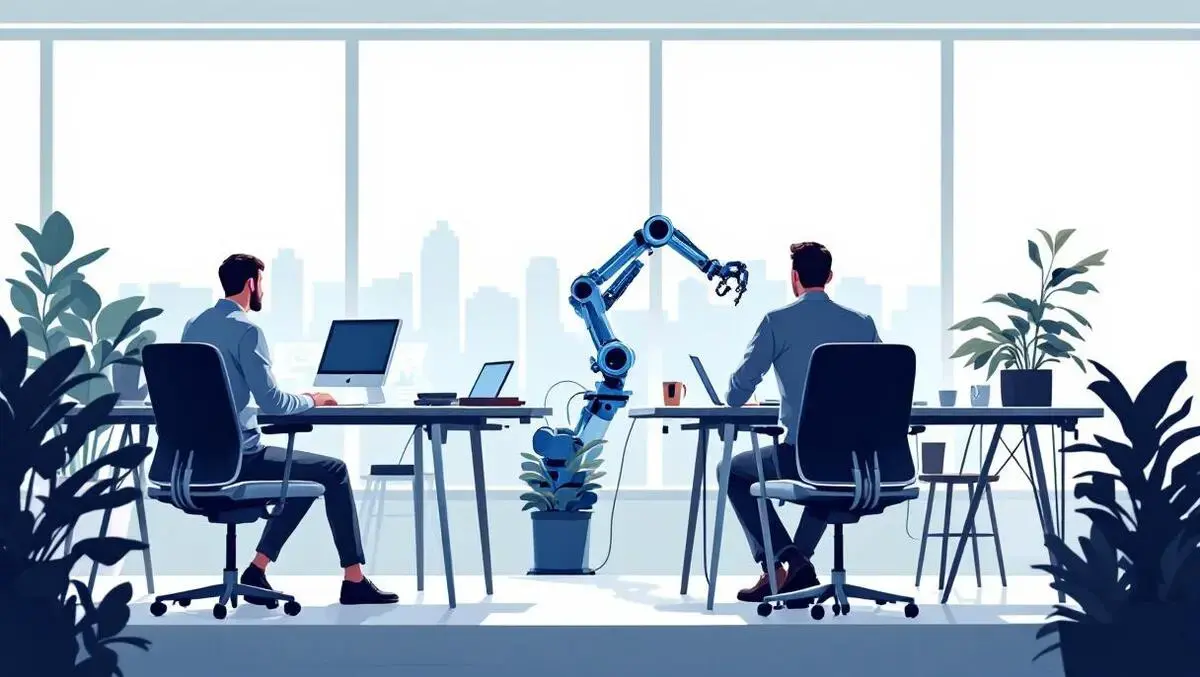
A central theme is what Deloitte calls a hybrid human and silicon workforce. AI software and robotics will become more important as employers contend with slower labour force growth and older populations, with machines taking on a larger share of routine or hazardous tasks.
Spending patterns remain heavily tilted towards tools rather than people. According to the report, 93% of AI spending goes to technology, while about 7% goes to people and skills.
That imbalance matters in New Zealand, where employers already face skills shortages in regional and technical roles. Organisations are adopting tools faster than they are redesigning jobs or building the expertise needed to use them well, Deloitte says.
Dalton said the issue has implications beyond current productivity. "As technology reshapes work, it creates pathways into higher value, more technical and more creative roles, provided we actively invest in the skills that make this possible. The long-term strength of New Zealand's economy will be shaped by how effectively we support our young people to build and apply these capabilities," he said.
Physical systems
The report also points to the rise of physical AI, referring to robots and autonomous systems that can sense, learn and act in real-world settings. This is moving beyond warehouses into areas such as agriculture, utilities, transport, healthcare support and infrastructure inspection, Deloitte says.
For New Zealand, the case rests on geography and workforce gaps. The country's dispersed infrastructure, distance from major markets and shortages in some specialist roles make automation more relevant in settings where travel, inspection and safety present persistent challenges.
Deloitte cites examples such as drones inspecting power lines, autonomous systems carrying out airfield checks and remote robotics operating in dangerous environments. In each case, automation is presented as a way to extend human labour rather than simply replace it.
"For New Zealand leaders, Tech Trends 2026 is not about keeping pace with Silicon Valley. It is about making deliberate choices that strengthen productivity, safety and confidence as digital systems increasingly shape physical reality," Dalton said.
Shallow adoption
Another warning concerns what Deloitte describes as shallow AI adoption. Many organisations are adding chatbots, assistants and software copilots without changing the underlying processes those tools sit on top of.
The result is visible activity that does not always produce material gains in productivity, service quality or cost. Deloitte notes that only around one in eight organisations globally has agentic AI in production, while many initiatives are expected to stall or fail.
By contrast, deeper adoption means changing workflows end to end, reducing tasks, shifting effort to software where appropriate and linking digital systems with physical operations. New Zealand organisations may be especially exposed to low-impact pilot programmes and quick subscription-based deployments that create momentum without much structural change, the report says.
"New Zealand's constraints make deep AI adoption more urgent, more risky to get wrong, and more valuable if done well, than in larger economies," Dalton said.
Cyber pressure
Cybersecurity is another major theme. AI is increasing the speed and scale of attacks, with automated tools helping criminals run phishing campaigns, identify weaknesses and adapt faster than human teams can respond, according to Deloitte.
The report links this directly to operational disruption in sectors such as aviation, healthcare, transport and other essential services. As more physical systems depend on digital platforms, cyber incidents can affect frontline operations as well as data and back-office systems.
Deloitte argues this makes AI-based cyber resilience more important, including continuous testing and automated detection and response. Governance is also becoming more significant as both attackers and defenders use machine-speed systems.
"When attackers and defenders both move at machine speed, governance matters more than reaction time," Dalton said.
Alongside the five main trends, the report highlights several emerging technology signals for leaders to watch, including neuromorphic chips, edge AI, biometric authentication, privacy issues linked to AI agents and generative engine optimisation.