

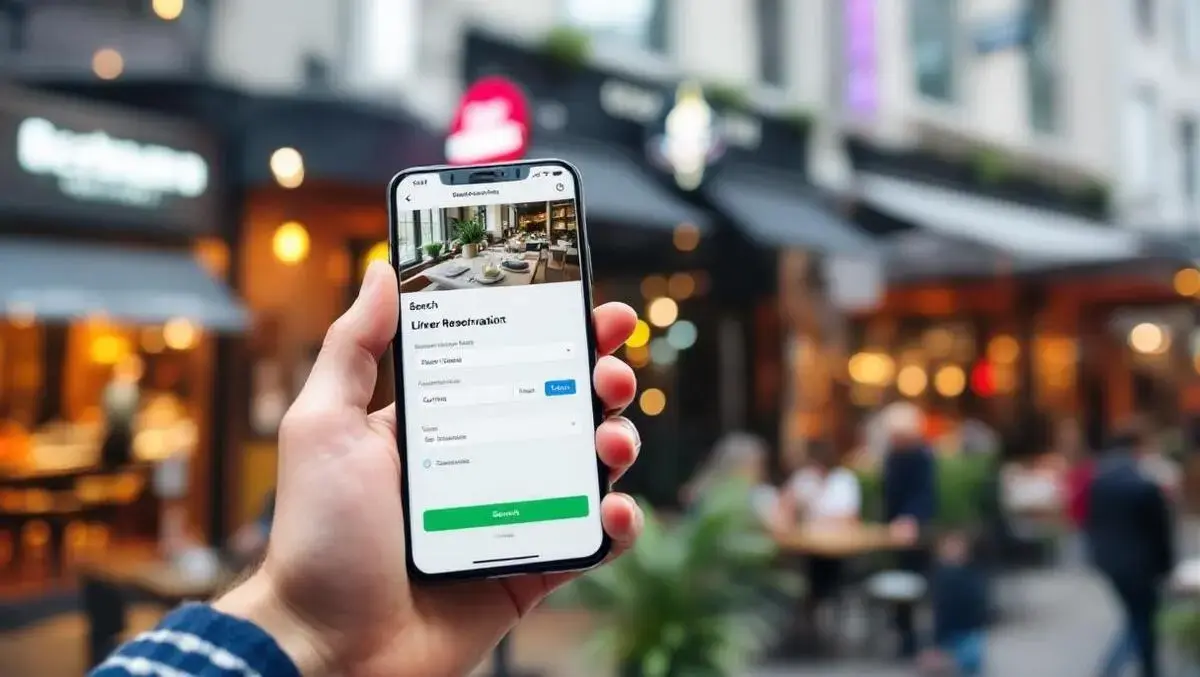

Google has added restaurant booking to AI Mode in Search for users in New Zealand, letting people move from a search query to a reservation in fewer steps.
The feature handles detailed requests that combine factors such as party size, date, time, location and cuisine. Users can ask for options such as a dog-friendly Italian restaurant in Ponsonby, a sushi venue in Auckland CBD with vegan tempura, a waterfront restaurant in Wellington for a birthday dinner, or a kid-friendly brunch spot in Christchurch.
Rather than requiring users to check several reservation services and restaurant websites, AI Mode searches for venues that match the criteria and surfaces available booking times. It then directs users to the relevant booking page to complete the reservation.
How it works
The system draws on live web browsing from Project Mariner, partner integrations in Search, and data from Google's Knowledge Graph and Google Maps. Together, those sources identify restaurants that fit a user's request and show real-time availability where available.
In New Zealand, Google is working with partners including OpenTable and Wowapps. Those partnerships connect Search with the booking services restaurants use.
The update extends Google's push to make Search a place where users can complete tasks, rather than only gather information. Restaurant reservations are a practical example because they often involve multiple constraints and time-sensitive availability.
For consumers, the change may reduce the steps involved in arranging a meal out, especially for group bookings or requests with specific preferences. A single search can combine practical requirements, such as whether a venue accepts dogs or children, with location, cuisine and time.
For booking platforms and restaurant operators, the feature could shift more traffic through Google's search interface before a reservation is completed on a partner site. That may give participating platforms and venues more exposure when they have inventory that matches a detailed user request.
Local rollout
The examples Google highlighted cover several of New Zealand's main urban dining markets, including Auckland, Wellington and Christchurch. That suggests the service is being positioned around everyday local discovery, rather than as a narrow trial limited to one city or one type of venue.
Real-time availability is central to the offer. Restaurant discovery has long been a common search activity, but users have often needed to repeat the same criteria across mapping tools, venue websites and booking services before finding a suitable time slot.
By combining those steps in AI Mode, Google is trying to reduce that friction inside Search. The approach also reflects wider competition among technology groups to build AI assistants that can not only answer questions, but also support transactions and other web-based tasks.
In practical terms, the update means a diner searching for a table for two at 7pm in Ponsonby, or a family looking for Sunday brunch in Christchurch, can ask in natural language and receive a list of places with reservation options that meet those requirements. From there, the user is linked to the booking page to complete the final step.