

Auckland warehouses squeeze more stock into same space
Thu, 5th Nov 2026 (Today)
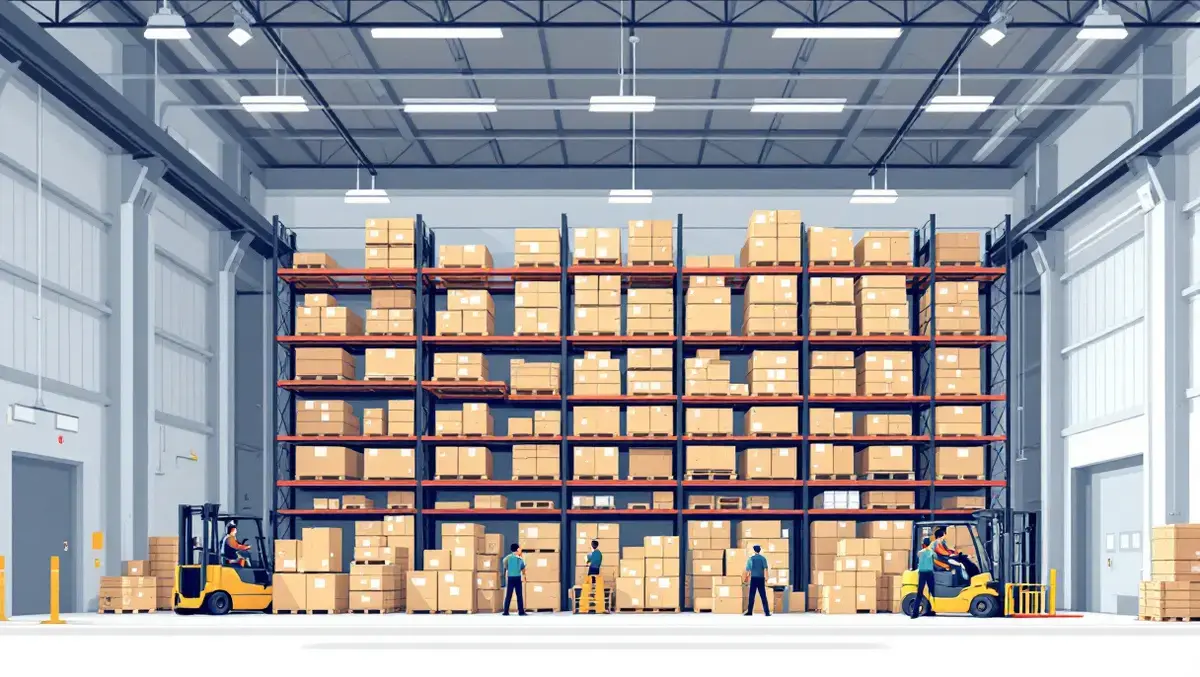
Warehouse operators in Auckland are increasing storage capacity within existing buildings as industrial land shortages drive up costs. Industry figures show a typical 4,000 square metre warehouse project is now designed for about 5,000 pallet positions.
The shift reflects growing pressure on occupiers to fit more inventory into the same footprint rather than expand floor area. In parts of Auckland, industrial land values have doubled over the past seven years to about $1,200 per square metre, while sector analysis points to an insufficient supply of suitable sites for larger industrial users.
That is driving greater spending on racking, automation and other storage systems, particularly where operators are trying to make better use of vertical space. The increase is often missed by conventional property measures, which focus on new floor space built or leased rather than how much storage can be created inside an existing facility.
Scott Currie, General Manager of Volume, said the economics of warehouse design had changed.
"Five years ago there was less focus on using the full volume of the building. Today, operators are asking us to accommodate substantially more stock within the same footprint and, once the available height has been better utilised, we start looking at denser storage systems," Currie said.
Seasonal demand is one factor behind the shift, he said, with some businesses needing much more room for only part of the year.
"Businesses can have large volumes of Christmas stock already on the water and suddenly need somewhere to put it when it arrives, even though that extra capacity may only be required for a relatively short period," he said.
Warehouse reconfiguration is also extending into areas once treated as non-storage space. Industry data shows operators are increasingly incorporating space above picking, packing and work areas into the wider storage footprint.
New metric
Currie said pallet positions per square metre could become a more useful measure of logistics activity than gross floor area alone. Warehousing investment may otherwise be undercounted if buildings stay the same size while internal storage density rises.
International modelling cited by the sector suggests more efficient warehouse layouts can reduce the floor area needed for storage by about 25% to 35%. For an operation requiring 10,000 square metres of storage, that could free up as much as 3,500 square metres while holding the same inventory.
At prime Auckland warehouse rents of roughly $203 per square metre, that space would represent annual rental value of up to $710,000. Over five years, that equates to about $3.6 million before relocation and other occupancy costs are considered.
Property analysis cited by the sector also points to underused height in some New Zealand warehouses. Buildings with 8 to 12 metres of clear height are sometimes racked to only 4 to 5 metres, suggesting pallet positions could rise by 20% to 30% through denser use of the available cube.
Volume has supplied more than 650 kilometres of shelving over the past five years, and the size of individual installations has increased as customers seek to hold more stock in existing premises. The company is targeting a further AUD $20 million in annual recurring revenue over the next four to five years, with warehouse efficiency projects expected to contribute to that growth.
Land constraints
The shortage of large industrial sites is most acute for operators that need substantial space for buildings, loading areas, vehicle circulation and future expansion. Those requirements limit the number of suitable options in established industrial areas.
Stephen Hughes, Chief Executive Officer of Drury South Crossing, said larger occupiers faced a narrower market than smaller users.
"For larger operators, it is not simply a matter of finding industrial land because they need sizeable contiguous sites that are serviced, well connected and capable of accommodating much larger facilities and their future growth," Hughes said.
Demand at Drury South illustrates the pace of land absorption, he said.
"We have sold more than 100ha at Drury South over the past five years and have around 30ha remaining, which gives some indication of how quickly the available supply of large-scale industrial land is being absorbed.
"As that supply tightens, businesses are increasingly having to choose between extracting more capacity from existing facilities or securing larger sites further out, where land is still available.
"As distribution centres become more automated and operators look to accommodate growing requirements such as EV charging, the power demands of larger facilities are increasing significantly, in some cases to several megawatts. That means access to both transport links and substantial electricity capacity is becoming an increasingly important consideration when businesses decide where to locate.
"At Drury South, that has meant combining direct access to State Highway 1 with substantial investment in electricity infrastructure, including a new 60MW substation developed at a cost of more than $30 million, while the transmission lines serving the area provide around twice the capacity available in many other locations."
Hughes said the size and purpose of distribution facilities were also changing as companies combined logistics functions into fewer locations.
"What we are seeing is a noticeable increase in the scale of facilities larger operators require, particularly where businesses are consolidating several distribution functions into one location and need purpose-built facilities that can hold significantly more product, move it more efficiently and provide enough room for their operations to continue growing over the longer term.
"That is also changing the land requirement because larger facilities need sites that can accommodate not only the building itself, but circulation, loading, access and future expansion, which is much harder to achieve in established industrial areas where land is constrained."
"Warehousing growth is no longer simply about building a bigger shed. It is also about how much additional capacity can be created inside the one you already have," Currie said.