

'Maturing' Australian gaming industry shows signs of growth
Fri, 8th May 2026
While the Australian video game industry is never going to compete with the large markets of Europe and North America, the state of play Down Under is starting to look increasingly positive.
Recent hit titles such as Untitled Goose Game and Cult of the Lamb have boosted Australia's reputation, and about 2500 people in Australia are now employed full-time in the gaming industry, with data from Interactive Games and Entertainment Association (IGEA) projecting that number could climb closer to 3000 by the end of the year.
With government support at both state and federal level, and a healthy supply of creative artists and writers, talented producers and coders, gamers will be pleased to discover there is plenty of optimism within the gaming industry itself about its current state, and projections for expansion in the near future.
Shifting demographics and changing tastes are part of the explanation behind the growth of gaming development in Australia.
Where the latest AAA blockbusters and jaw-droppingly sharp graphics used to be de rigour, trends in gaming have recently tended towards more easily accessible, family friendly titles, that are not necessarily being played by tweens and teenagers on a Microsoft or Sony console, or a gaming PC kitted out with RGB lights and liquid cooling.
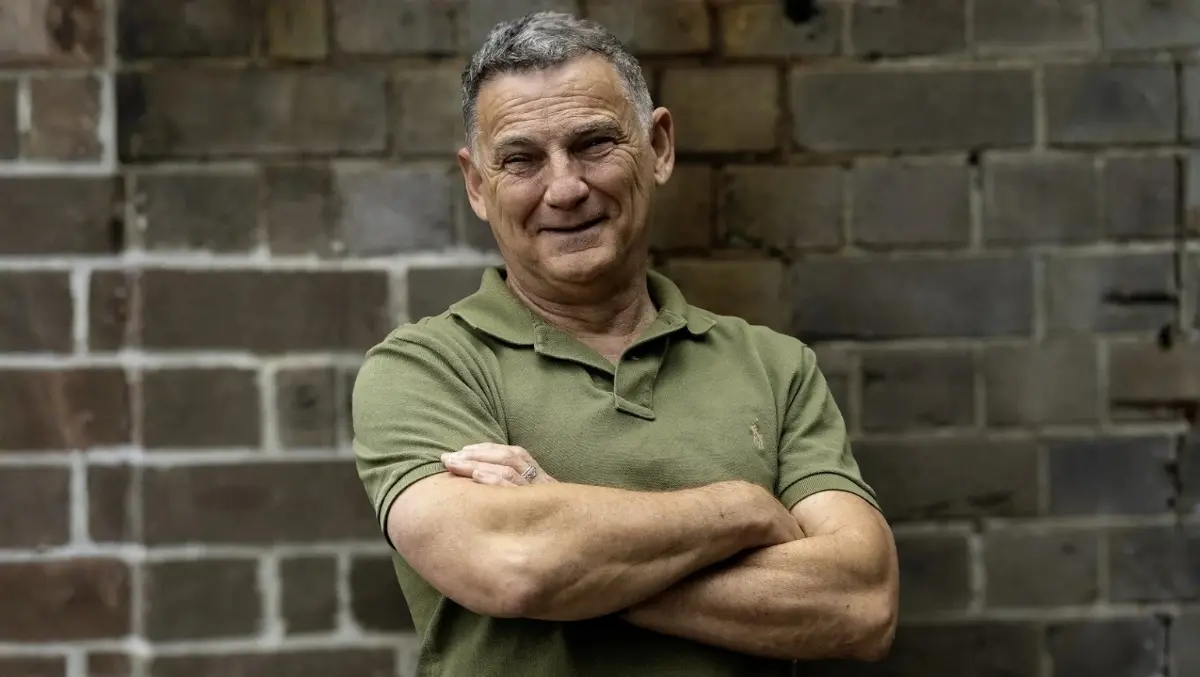
"We're in quite a good space (as an industry)," said Ron Curry, CEO of IGEA.
"When you compare us to the rest of the world, we've got a really good, maturing industry that is pumping out some great games. If you look at our stats, just short of 50 per cent of studios have been around for around six years, which shows the maturity. But we also know there's about a third of them who are new businesses that haven't launched a game yet.
"What that looks like to us is there's a good, mature side of the business, that sustains employment, that has the multipliers who know how to train people, but also people starting up their own and bringing their own creativity, own great ideas, to the market.
"We know that our market is global, but 95 per cent of the games, or the revenue that's generated through video games, is exported."
Scoring a very favourable 8/10 from IGN, Untitled Goose Game is an export that charmed players around the world with its simple, endearing gameplay featuring the exploits of a mischievous goose in an English village, and went on to sell over 2 million copies. Massive Monster's Cult of the Lamb and Team Cherry's Hollow Knight also received praise from gamers and critics alike.
Some Australian studios have faced recent adversity, however. Melbourne-based Big Ant Studios, which specialises in sport games, has released AFL, cricket and rugby league titles featuring genuine likenesses of stars such as Reece Walsh, Lachie Neale and Pat Cummins.
These games allow passionate fanbases to play as their favourite teams and players but Big Ant have faced criticism over the years for releasing titles in a significantly undercooked state.
While sales were strong for Big Ant, last year's launch of Rugby League 26, the first title in the series since Rugby League Live 4 in 2017, was marred by poor critical and user reviews, with fans flocking to social media to post glitches and bugs that, in some instances, were game-breaking. The Metacritic summary is far from complimentary, stating Rugby League 26 "treats the sport it is trying to emulate with utter disdain and contempt."
Some people demanded refunds, and CEO Ross Symons was actively involved in stoushes with disappointed buyers on X. Coders worked tirelessly over the following weeks to deliver patches that would ostensibly solve many of the game's irritating and immersion-breaking bugs, but Big Ant's reputation undoubtedly took a hit.
"One of the biggest challenges in Rugby League 26 was the sheer scale of the production," Symons said in an email response.
"The game includes the NRL and Super League, across both men's and women's competitions, which means thousands of licenced items need to be created, approved and maintained.
"Our team also travelled globally to scan thousands of athletes, so the players, clubs and sponsors could be represented as authentically as possible.
"That complexity does not stop at launch. Rugby League 26 continues to evolve with updated content, gameplay improvements and a huge amount of cross-platform user-generated content from the community."
Gamers were right to feel aggrieved after parting with $100, only to be met with a product that was clearly underdeveloped, especially considering the eight-year gap between NRL titles. Symons referenced challenges faced by Big Ant, as well as the wider Australian gaming industry, which largely come down to attracting talent, where geography is a factor that cannot be understated.
"Big Ant faces some unique challenges simply because of where we are," Symons said.
"Australia is about as far away as you can get from much of the international licenced content we work with, so the tyranny of distance is very real.
"Whether it is player scanning, meetings with rights holders, approvals, or access to competitions, there is always an added logistical layer.
"The broader issue for both Big Ant and the Australian games industry is qualified personnel. It is very difficult to find engineers and artists with deep console game development experience, and since COVID it has become even harder to attract those people to Australia.
"The positive is that Australia now has the Digital Games Tax Offset, which helps level the playing field against other countries that have had government incentives for many years. It's imperative that support remains in place if Australia wants to continue to build and retain a serious, globally competitive games industry."
It would be very optimistic to expect the same level of finished product from an Australian studio as a gamer would from international behemoths, but after the issues surrounding Rugby League 26, consumers will treat Big Ant with more scepticism when the next title in the Rugby League series is released.
On the whole, however, there is reason for optimism within Australian gaming, as long as gamers manage their own expectations. Government funding is in place, sales have been strong for multiple recent Australian-made titles, and talented people are currently working on what they hope will be the next big hit.