

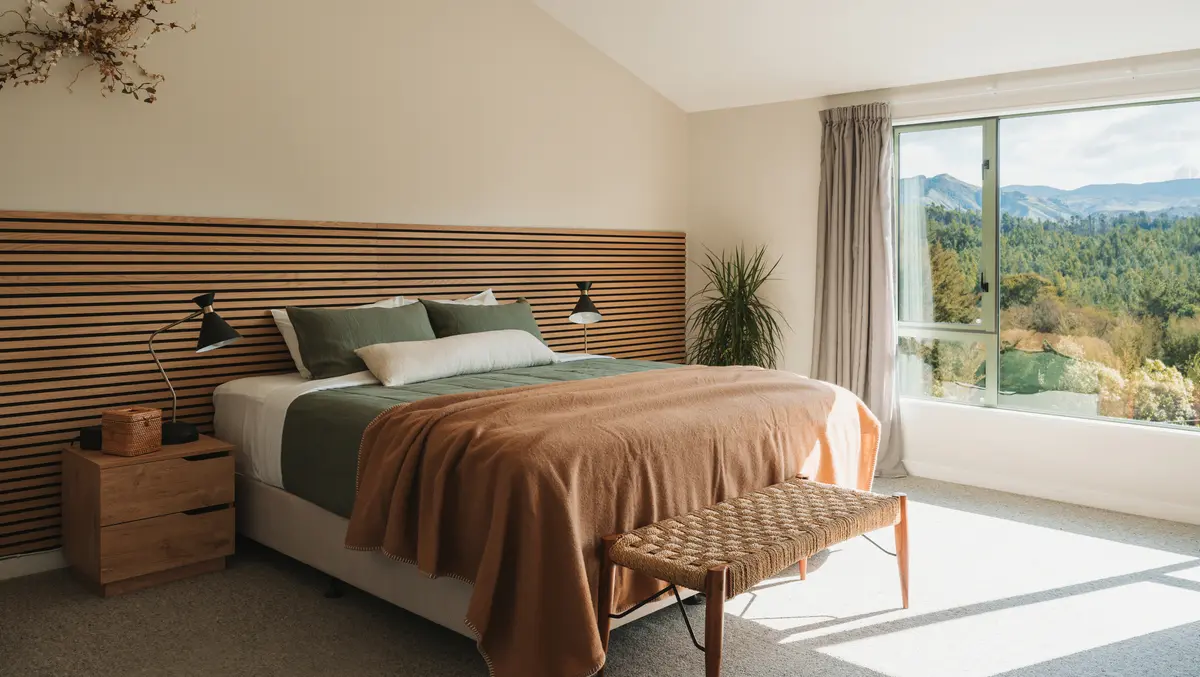
New device-free luxury retreat in Tasman urges visitors to 'switch off'
Thu, 2nd Oct 2025
A chef with Michelin-star restaurant experience is set to open a high-end "slow stay" retreat in New Zealand's Tasman region, aiming to attract both international and domestic tourists seeking a device-free, wellness-focused holiday experience.
Toby Stuart, an internationally recognised executive chef whose career spans more than 20 years and five countries, will personally prepare all meals at Domu Retreat, a new luxury property designed to support relaxation, conversation, and connection among guests.
The retreat, located on a coastal ridge overlooking the Abel Tasman National Park and Tasman Bay, will cater to a maximum of 12 adults across six suites. The site has been developed at a multimillion-dollar value, with an additional capital investment of approximately NZD $500,000 to enhance guest comfort through premium beds and natural material furnishings.
Deliberate disconnection
The "slow stay" model at Domu Retreat centres on encouraging guests to put away their digital devices.
There are no televisions in suites and guests are urged to switch off in favour of a curated library, magazines, board games, communal spaces, yoga, and meditation.
"A slow stay is allowing guests to stop rushing to trade urgency for presence. We've designed spaces that encourage conversation from the dinner table to the library to encourage greater connection. "We've removed TVs from the rooms because we want guests to engage with each other, with books, with the view not the news cycle. "Domu is the opposite of the all-you-can-do resort model. Here, the luxury is in having nothing on the agenda except what you choose. We live in a world of constant alerts and pings Domu is about switching them all off so you can breathe." "A slow stay is about how you feel when you leave rested, inspired, and more connected than when you arrived. You come here for the silence as much as for the food. That quiet is a luxury people don't realise they need until they have it."
Dinner at Domu is presented as a communal event, featuring the "dinner and discourse" format where guests are encouraged to engage in conversation, assisted by prompts and hosted by Stuart and his partner, Sabina Bronicka-Stuart. The property positions itself with a guest mix of approximately 70% international and 30% domestic visitors, with particular focus on the United States, United Kingdom, Australia, Germany, and Switzerland.
Menu and produce
The chef-led dining programme will showcase local ingredients from New Zealand's boutique producers. The menu will include dishes such as spearfished butterfish from D'Urville Island, Himalayan tahr and other wild South Island game, as well as organic beef and lamb sourced from Golden Bay farms. The retreat will also feature a concise wine list that highlights organic labels, including products from Cloudy Bay Vineyards.
Stuart commented on his menu and style, stating:
"We're not trying to reinvent fine dining or do anything too complicated but rather bring to life the experience on a plate. "Our menu reflects the Tasman region and beyond and we want guests to taste the landscape they've been exploring."
Wellness tourism trend
The launch comes as the global wellness tourism market continues to expand, with research indicating an annual growth rate of 12%. Projections suggest the sector could reach a value of USD $2.1 trillion by 2030. Domu Retreat is targeting wellness-focused travellers seeking high-value, longer-stay experiences, which aligns with national tourism objectives.
Stuart explained the retreat's approach to hospitality:
"This approach offers the service and quality of an international luxury lodge, but in a setting where guests feel like they are staying in a friend's home."
Facilities and operations
Rates at Domu Retreat begin at NZD $2,000 per night for two, covering daily breakfast, a pre-dinner cocktail with canapés, and a chef-hosted multi-course dinner. Guests also have access to spa amenities, a heated plunge pool, a wood-fired sauna, and daily yoga. Lunch and wine are available at an extra cost. The retreat will operate year-round, with the menu and activity schedule changing seasonally to reflect the Tasman region's produce and climate.
Marketing efforts will concentrate on partnerships with travel agents, luxury tourism operators, and targeted international campaigns to attract guests seeking an alternative to more traditional technology-driven resort holidays.