

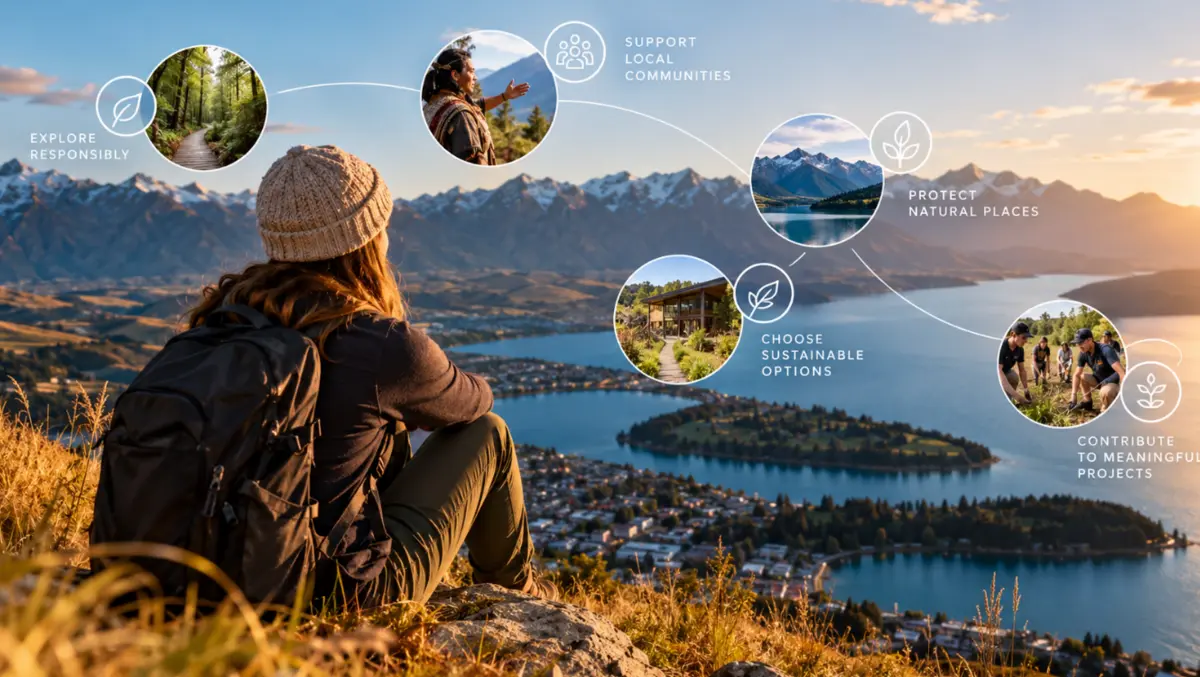

Smart Planner has launched the first public beta of its travel app for iOS and Android. The Queenstown startup says the platform is designed to help travellers engage more closely with destinations and local communities.
The app is the first public release from the New Zealand travel technology company. It is testing a model that combines trip planning with destination information, local business listings and community-focused travel content.
Smart Planner is positioning the product within a broader tourism debate about whether success should be measured by more than visitor numbers and spending. It argues that traveller choices should also be judged by their effect on local communities, culture and the environment.
The beta includes destination discovery tools, Search & Save functions, suggested itineraries, and early versions of an AI-powered trip itinerary planner and trip assistant. Users can browse local experiences and businesses, save places of interest, find community initiatives, and access destination information intended to inform travel decisions.
Rather than focusing only on attractions, accommodation and activities, the platform presents destinations through cultural, environmental and practical information. Its aim is to make those considerations part of the normal planning process, rather than separate research travellers carry out on their own.
Co-founder Tales Melo said the company was responding to a shift in how parts of the tourism sector view long-term growth.
"For a long time, tourism success has been closely associated with visitor numbers and economic growth. But we believe there is a bigger question: what positive value does tourism create for the people and places receiving those visitors?" Melo said.
"A great holiday should be more than a collection of attractions and photographs. It should create connections, support local businesses, encourage understanding and give travellers opportunities to contribute positively to the destinations they experience," he said.
Queenstown focus
The company has chosen the Queenstown Lakes region as its first market for developing and testing the product. The area is a major tourism destination and has also been part of a wider discussion about how to balance visitor demand with environmental and community pressures.
Its initial destination content also covers Wānaka, Arrowtown and Fiordland. Smart Planner plans to expand to other destinations over time, although its immediate focus is on refining the platform through testing and user feedback.
Queenstown Lakes has set out a destination management plan under the banner Travel to a Thriving Future, including an ambition to become a regenerative tourism destination with a carbon-zero visitor economy by 2030. Smart Planner said that local context made the region a relevant starting point for its approach.
"AI can generate a list of things to do in Queenstown in seconds. But the bigger challenge is helping travellers understand what makes a destination special, discover the people behind the experiences and make choices that create meaningful connections," Melo said.
"Technology should bring people closer to destinations, not make travel feel more disconnected or generic," he said.
Broader model
Beyond the consumer app, Smart Planner says it is building a connected tourism system that could also increase visibility for local businesses and community or environmental initiatives. The company is also considering future data analytics and tourism intelligence tools for destination management, although those features remain part of a longer-term roadmap.
That places the startup among a growing group of tourism technology businesses looking beyond booking and itinerary tools alone. In Smart Planner's case, the commercial proposition is tied to the idea that digital products can help shape visitor behaviour in ways that spread economic activity more widely and improve awareness of local priorities.
The company acknowledged that software alone cannot deliver regenerative tourism outcomes. Long-term progress, it said, depends on cooperation between travellers, tourism operators, destination organisations and residents, with technology serving as a way to improve access to information and opportunities for engagement.
Smart Planner is now entering a testing and learning phase with travellers and tourism stakeholders. Its long-term objective is to develop the model in New Zealand before expanding into Australia and other markets.
"Queenstown is famous for the experiences it offers the world. But what makes it truly special goes far beyond the scenery," Melo said.
"There are local people, businesses, cultures, communities and environmental initiatives that form the identity of this destination. We want to help visitors discover and connect with that side of Queenstown too," he said.