NVIDIA stories
The shock departure could rattle AI stocks and KiwiSaver funds, as Congress weighs tougher scrutiny of Nvidia's role in the sector.
Researchers have shown a compromised DPU can change AI outputs in memory, exposing gaps in checks that only verify saved model files.
Players can now stream Phantom Blade Zero and nine other titles on GeForce NOW, while Indian users gain new four-month membership options.
Thin-and-light Windows laptops with up to 128GB of memory are now on sale, giving developers and creators local AI power from USD $2,599.
The release gives enterprises a steadier base for running agentic AI workloads in production, with lower infrastructure strain and less downtime.
The new system is designed to help building operators cut nuisance alarms and manage more complex sites with fewer skilled staff.
Adobe is accelerating AI dealmaking as it pushes its models into rival platforms and brings outside systems into its own apps.
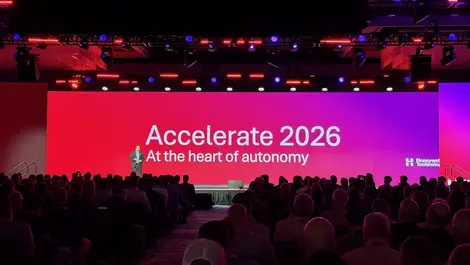
Building operators could gain conversational AI tools and alarm support as Honeywell expands software across fire, security and energy systems.
Industrial users are adopting AI only in tightly bounded roles, as safety, power and integration constraints keep deployments under close human control.
The move places Illumio in a vendor-neutral model that helps organisations judge how to contain breaches in increasingly connected AI systems.
The move puts autonomous AI agents and GPU clusters under open source scrutiny as NVIDIA seeks to shape the Kubernetes stack around them.
The move puts Agent Substrate, gVisor and OpenRL under neutral governance as companies race to secure and scale automated workloads.
The New York-based startup says its simulation tools can catch agent failures before customers see them, after closing a USD $13 million seed round.
Built from refurbished servers, the Ottawa project is testing whether one researcher can run local AI systems with greater control and transparency.
The Series A will help the San Francisco start-up broaden chip support and ease the high cost of serving AI models at scale.
Scaling atomic semiconductor output is now a priority as the Sydney group prepares to meet demand for its current chips and quantum roadmap.
The move gives businesses running sensitive AI workloads hardware-enforced protection for prompts, model weights and intermediate data in Google Cloud.
Partners can now trial private AI workloads locally as the hosted kit helps them assess compliance, latency and sovereignty before production.
By pooling hidden datasets from 18 institutions, the consortium hopes to speed Alzheimer's research and cut analysis time from weeks to minutes.
The new service targets higher costs and slower deployment for teams building models for robotics, manufacturing, biology and defence.