Skills shortage stories
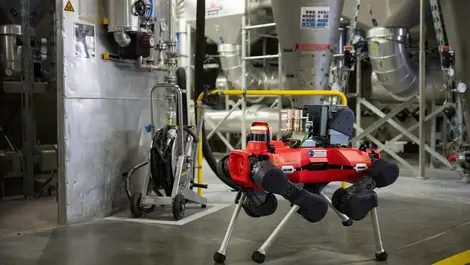
Yokogawa is integrating its OpreX Robot Management Core with ANYbotics' ANYmal robots to automate hazardous industrial site inspections.
Enterprises rush to adopt agentic AI via external platforms, but few have standardised, organisation-wide deployments in place yet.
CyberArk names PwC its 2025 Global Partner of the Year as partner-led deals surge and certification-driven identity security gains pace.
EC-Council rolls out its biggest training expansion in 25 years, unveiling an AI risk credential suite and revamped CISO leadership course.
Fortinet updates FortiCNAPP to fuse network, data and runtime signals into one workflow, aiming to cut cloud tool sprawl and speed remediation.
Cyber and AI specialists top tech pay into 2026 as entry-level hiring stalls and burnout surges across Australia and New Zealand.
Tesa marks 45 years in Singapore with a new A*STAR lab, boosting Asia-Pacific innovation and sustainable adhesive manufacturing.
Writer's Toolbox secures Singapore school contracts as the city-state boosts AI investment with SGD $1 billion for research and development.
Rockwell opens a 24/7 Singapore security operations centre to monitor and defend industrial OT networks across the Asia Pacific region.
Tech roles keep topping UK pay charts as AI skills drive a 9% rise in median salaries to GBP £48,595, outpacing wider wage growth.
QA becomes an official NVIDIA training partner and launches a 19‑month Level 6 AI Engineer apprenticeship to tackle UK AI skills gaps.
UK firms are bullish on quantum computing, but a talent squeeze and flat budgets threaten to slow progress from pilots to scale.
NetAssist deploys Graylog Security, slashing threat detection from four hours to under 45 minutes while cutting SIEM and infra costs.
Futurense launches FDE Academy in Bengaluru to train engineers for high-demand Forward Deployed Engineering and AI deployment roles.
Arts Centre Melbourne tightens cyber defences after a foiled phishing attack exposed gaps filled by Arctic Wolf's round-the-clock monitoring.
NG Bailey will recruit over 70 apprentices across the UK, offering roles in engineering, building services, facilities and IT.
AA teams with Multiverse on an AI apprenticeship to upskill staff in everyday roles, aiming to boost planning, efficiency and customer service.
Addison Lee is training staff in AI and data with Multiverse to cut dead mileage, sharpen forecasting and boost London fleet efficiency.
Malaysia banks on AI, chips and data centres to sustain 4-5% growth in 2026, as SME adoption and workforce skills emerge as key tests.
Rockwell opens a Singapore Security Operations Centre to deliver 24/7 industrial cyber defence and OT threat response across Asia Pacific.